1. What is strength as basic physical ability?. Explain them and give an example of each of them.
Physical ability to perform a job or a movement. The muscular strength, the force of the wind, the strength to lift a stone.
How many types of strength are there?
Types:
 Maxium strength: maxium strength is the force greater than a group of muscles can exert by means of a vocabulary contraction. In particular, it is the largest weight that a person can move in a single movement.
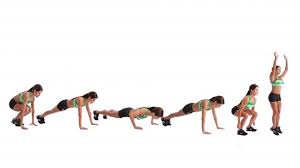
Explosive strength: It is a manifestation of the force that is based on generating as much force as possible in the shortest time without losing efficiency. For this reason this type of force is predominant in most team sports and in some of the individual sports modalities.

Endurance strength: Ability to maintain a force at a constant level during a certain period of time, or training. It is classified as anisometric force, since the muscle has movement when the resistance is overcome.
2 What is flexibility as basic physical capacity?
The ability to bend the body easily and safely.
What factors does flexibility depend on?
The flexibility depend on
- Muscular elasticity: capacity for muscle enlargement and recovery of the initial position.
- Joint mobility: Maximum degree of movement of each joint.
3 What is endurance as basic physical ability?
Physical resistance is one of the four basic physical abilities, particularly one that allows us to carry out an activity or effort for as long as possible. One of the most commonly used definitions is the physical capacity of a body to withstand external resistance for a certain time.
How many types of endurance are there?
There are two types of resistance, aerobic resistance and anaerobic resistance. Aerobic resistance would be that which aims to withstand and resist the physical requirement to again oxygen, while anaerobic resistance is conditioned by an insufficient supply of oxygen to
the muscles.
4 How can I improve my endurance?
To obtain information about the practice and the application, it is also important to have a good resistance. To improve the physical resistance will help us to be in optimal conditions to practice any sport or, even, be more prepared to face the daily activity.
- Staff: pentagrama
- Treble clef: clave de sol
- Recorder: flauta dulce
- Note: nota
- Rest: silencio (como símbolo de pentagrama)
- Silence: silencio (en general)
- Whole note: redonda
- Half note: blanca
- Quarter note: negra
- Eight note: corchea
- Tone: tono
- Accidentals: alteraciones
- Flat: bemol
- Guitar: guitarra
- Fret: traste
- Interval: intervalo
- Ascending: ascendente
- Play: tocar
- Noise: ruido
- Pitch: altura
- High-pitched: agudo
- Low- pitched: grave
- Melody: melodía
- Duration: duración
- Long: largo
- Short: corto
- Choir: coro
- Chord: acorde
- Semitone: semitono
- Sharp: sostenido
- Keyboard: teclado
- String: cuerda
- Bass: bajo
- Descending: descendente
- Major scale: escala mayor
-Does sadness or melancholy belong to music?
A song can be sad, some topics aren't happy, for example: death of a family member.
This song is good to think about some things and to relax.
-Or must music always make you feel happy or glad?
Not always happy if I hear happy music all the day I don't relax.
This type of music is good to do homework and for my body not to stay off all day.
I really love pasta.
My favourite type of pasta is rice
my favourite kind is spaghettis
It ´s good because he has got tomatoe and a piece of beef
Yes I like spaghettis
I eat sometimes
When my mother does pasta
Antoine Griezmann, a football player (Atlético de Madrid)
He´s medium-height
He has got short straight brown hair
he has got big blue eyes, a small nose and big ears.
he has got a moustache.

UNIT 5
pushing: empujando
holding: sujetando
sitting: sentando
kissing: besando
walking: caminando
built: construir
carry: llevar
climb: escalar
close: cerrar
dive: bucear
draw: dibujar
fly: volar
hold: sujetar
jump: saltar
open: abrir
practise: practicar
sail: navegar
huge: enorme
tiny: minúsculo
model: modelo
UNIT 6
shopping center: centro comercial
food stall: puesto de comida
market: mercado
online shopping website: sitio web de compares online
supermarket: super mercado
FOOD
chickpeas: garbanzos
beans: fregoles
beef: carne
cheese: queso
chicken: pollo
chilli sauce: salsa picante
grapes: uvas
jam: jamón
mushrooms: champiñones
oil: aceite
onion: cebolla
rice: arroz
salt and pepper: sal y pimineto
spices: especias
sugar: azúcar
yoghurt: yogur
crunchy: crujiente
salty: salado
healthy: saludable
spicy: picante
sweet: dulce
tasty: sabroso
UNIT 7
cardigan:
hoodie: gorro
carnival: carnaval
parade: desfile
Chilena: Overhead kick
Caño: soupt
Portería: goal
Portero: goalkeeper
Árbitro: referee
Pelota: ball
Penalti: penalty
Falta: lack
Tiro: shoot
Gol: goal
Saque inicial: kick off
Corner: corner
Jugadores: players
Tarjeta amarilla: yellow card
Tarjeta roja: red card
Lemon yellow:
The pigment known commonly as "lemon yellow" could consist of barium chromate, strontium chromate, or a mixture of lead chromate with lead sulphate. The preparation was described by Vauquelin in 1809, but some years seem to have passed before it was produced commercially. During the nineteenth century, it was often mixed with strontium chromate, and the name "lemon yellow" was liable to be used for barium chromate, strontium chromate and a mixture of the two. It´s a stable yellow with low hiding power.
Watercolor: watercolor paints are renowned for their ability to capture the fleeting essence of light as it fluctuates throughout the day earmarking the passage of time.


